


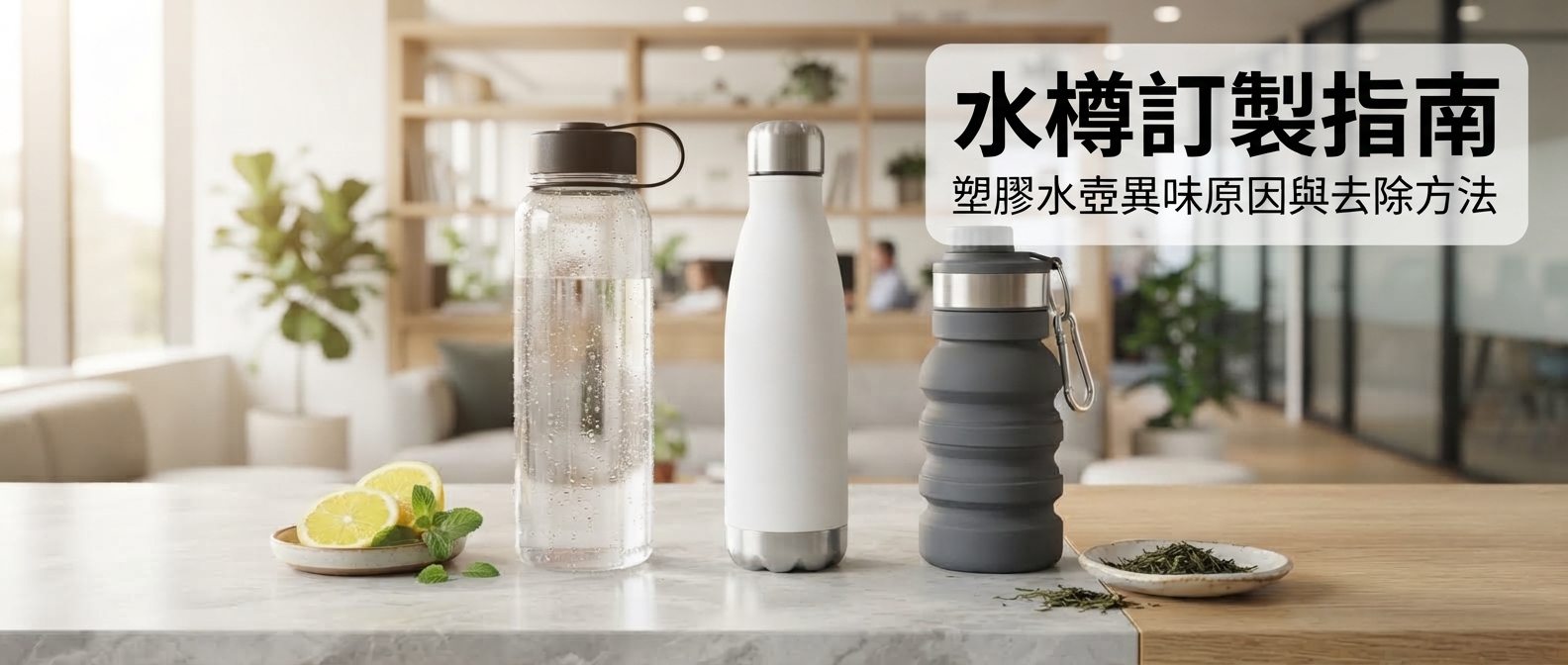
Water bottles are practical gifts widely used for corporate events, employee benefits, and member giveaways. However, if recipients encounter a pungent plastic odor upon opening the bottle, or if stubborn smells linger after regular use, even the most attractive brand logo can lose its appeal. When customizing corporate water bottles, in addition to capacity, appearance, and printing quality, factors such as material safety, food-contact compliance, ease of cleaning, and durability are equally critical. Why do water bottles smell? Does a strong chemical smell in a new bottle mean it is toxic? This guide breaks down the common causes, practical deodorizing solutions, and expert advice on material selection and design for custom corporate water bottles.
Many people use water bottles to hold coffee, tea, juice, or protein shakes. If not thoroughly washed immediately after consumption, residue clings to the bottle walls and crevices. In humid and warm environments, bacteria and mold multiply rapidly, serving as the primary culprits behind foul-smelling plastic bottles. Even when used strictly for drinking water, bacteria from the mouth can transfer through the bottle opening and produce noticeable odors over time.
Beyond drink residue, the intrinsic properties of plastic materials also play a significant role. Although plastic surfaces appear smooth to the naked eye, under a microscope they contain micro-pores that easily absorb odors and pigments. Furthermore, scrubbing the interior with abrasive scouring pads or steel wire brushes creates tiny scratches on the bottle walls. These scratches harbor dirt, grime, and bacteria, making odors difficult to eliminate.
It is common for some new water bottles to emit a mild scent upon unboxing. This odor can stem from raw materials, manufacturing processes, packaging, or airtight storage environments—it cannot be universally attributed to mold-release agents alone. As a standard practice, disassemble the lid, straw, and silicone sealing ring, wash thoroughly with a neutral detergent, and let all components air-dry completely in a well-ventilated area. If a strong, pungent chemical odor persists after multiple washes, it is best to discontinue use.
Odor alone cannot determine whether a water bottle is toxic. When purchasing, check whether the product clearly indicates its material, heat-resistance temperature, food-contact suitability, and manufacturer details, and always use it according to its specified purpose. Premium sports water bottles on the market today are predominantly made from food-grade PP (polypropylene) or next-generation copolyesters (such as Tritan). These materials are free of bisphenol A (BPA) and endocrine disruptors. Even if there is a slight scent upon first opening, as long as the product meets international food-contact safety standards—such as US FDA certification—it poses no health hazard.
For corporate procurement, rather than relying solely on a "BPA-Free" label, buyers should request food-contact compliance test reports, material specifications, and heat-tolerance data from suppliers. If the product origin is unverified, labeling is ambiguous, or a pungent plastic odor lingers after repeated cleanings, it is advisable to avoid using it.
If you are wondering how to eliminate plastic odors from your water bottle, try using these common natural household ingredients to deodorize effortlessly:
For stubborn smells caused by dried-in beverage residues, deep cleaning is recommended:
Note: After washing, always leave the lid off and invert the bottle in a well-ventilated area to air-dry completely. Keeping the bottle thoroughly dry is the best way to prevent odors from returning.
The key advantage of water bottles is their high frequency of use. They seamlessly integrate into office desks, daily commutes, workouts, travels, and outdoor activities. A well-designed, user-friendly bottle can stay with clients or employees for months or even years, exposing your brand logo every time it is used.
|
Comparison Item |
Standard Plastic Bottle |
Tritan Water Bottle |
Stainless Steel Bottle |
|
Key Features |
Lightweight, wide selection of styles and budget options |
Crystal-clear, impact-resistant, premium hand-feel |
Durable, prominent metallic texture and finish |
|
Weight |
Light |
Light |
More substantial |
|
Brand Image |
Energetic, youthful, accessible |
Sporty, wellness-focused, lifestyle-oriented |
Corporate, professional, high-end |
|
Best-Fit Scenarios |
Large-scale events, mass giveaways |
Sports events, staff perks, brand merchandise |
Client gifts, VIPs, executive employee gifts |
For large-scale event distribution, prioritizing low weight, unit cost, and shipping volume makes sense. If your brand aims for a higher-end texture and long-term utility, Tritan or stainless steel models are recommended.
From initial concept to final handover to your clients, the corporate water bottle customization process can be divided into six structured steps:
Printing techniques can be tailored to the bottle material, surface treatment, and logo complexity—options include silkscreen printing, pad printing, UV printing, or laser engraving on metallic surfaces. Beyond logo placement, organizations can customize bottle body colors, capacity, cap styles, straws, handles, and retail-grade packaging, turning the bottle into an authentic extension of their brand identity.
The very same bottle model can be elevated from an event giveaway to a refined executive gift simply by adjusting materials, colorways, and packaging. If your organization has a set event date, it is best to confirm styles and designs early to ensure ample time for sample reviews, mass production, and freight transit.
Common reasons include dried beverage residues, dirt accumulation inside lids or silicone seals, incomplete drying after washing, and porous materials absorbing odors. Often, the smell does not originate from the bottle body itself, but rather from straws, silicone gaskets, and screw threads.
Not necessarily, though a strong chemical odor should not be ignored. Clean and aerate the bottle first. If the odor continues to linger, or if the bottle develops deformities, sticky surfaces, or cracks, cease using it immediately. Always prioritize products with clearly disclosed material types and certified food-contact compliance.
Begin by thoroughly washing with a mild detergent and a soft sponge brush. Then, apply a baking soda or citric acid treatment according to directions. Finally, rinse well with fresh water and leave the bottle inverted with the cap off to air-dry completely. If the silicone gasket retains odors, remove it for a targeted wash or replace it.
When selecting corporate gifts and promotional merchandise for your brand, safety and everyday practicality are equally paramount. Opt for premium, non-toxic, and odor-resistant materials. Building trust through meticulous details and communicating brand value through quality craftsmanship—that is the true power of promotional marketing.
Reliable HK provides a wide selection of water bottles, outdoor gear, and various corporate gift options, backed by end-to-end service spanning product curation, design, procurement, production, and quality supervision. Whether for corporate events, sporting competitions, loyalty rewards, or staff perks, we help you select the ideal materials, designs, and packaging aligned with your brand positioning, target audience, and budget. Feel free to visit the Reliable HK Official Website or contact our professional team to learn about printing methods, minimum order quantities (MOQ), and quotation details, and customize practical, branded sports water bottles today.
BACK Premium Gift Categories


